Seeds are a critical determinant of agricultural productivity, farm incomes and food security, and an important enabler of the transition towards climate-resilient and resource-efficient agriculture. In rice, improved seed technologies can raise yield potential, strengthen resilience and improve resource use efficiency, reducing pressure on land and other natural resources. This is particularly important for India, where future increases in production will need to come increasingly from productivity gains rather than the expansion of area under rice. Despite its position as the world’s largest rice producer, India’s average paddy yield (4.4 MT per hectare) remains lower than the world average and countries like China and Vietnam. The productivity gap persists despite substantial public sector investment in agricultural research and knowledge infrastructure and is partly associated with the limited adoption of hybrid rice, which remains below 10 per cent in India. Wider adoption of high-yielding and climate-resilient hybrids, supported by appropriate agronomic practices and enabling policies, could help narrow the yield gap, enhance farm profitability and improve resource use efficiency. Thus, strengthening the rice seed ecosystem, including greater complementarities between public research and private sector innovation, has important implications for India’s future rice and agricultural policy.
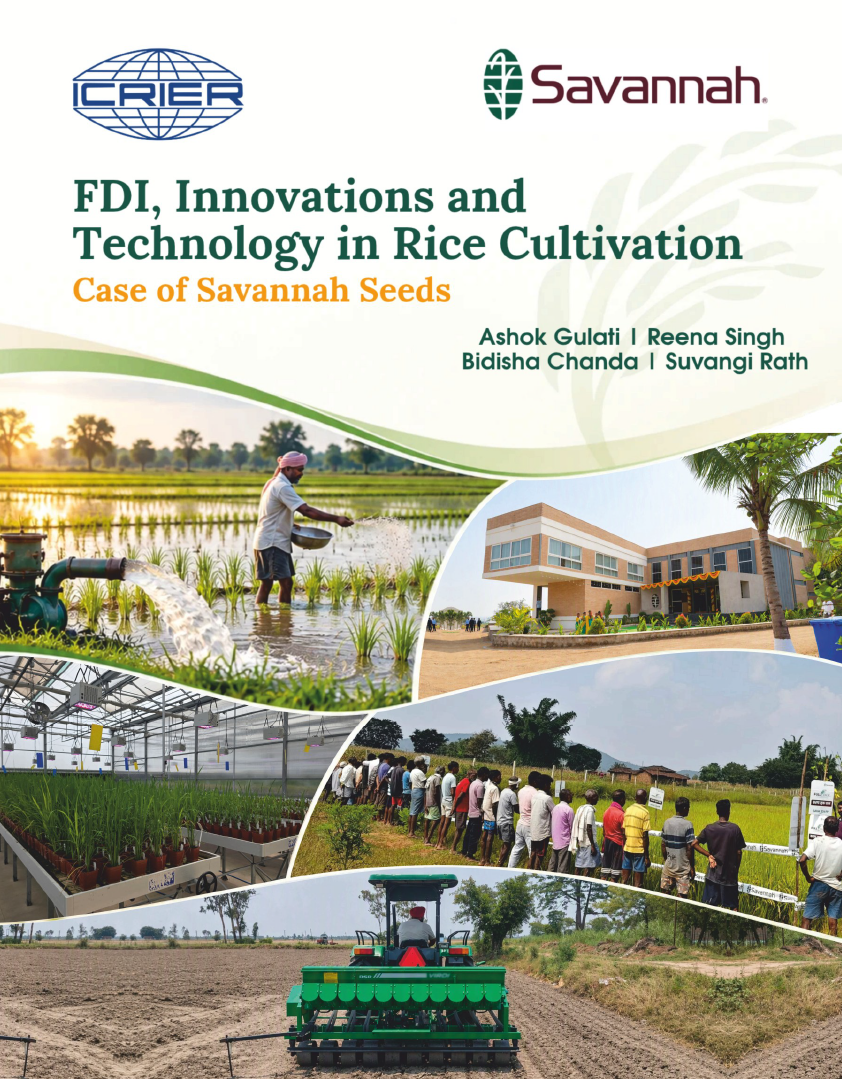
Against this backdrop, this study assesses the socioeconomic impact of Savannah Seeds Private Limited’s (Savannah’s) operations in India, with particular focus on rice farmers and the broader rice economy. It examines 15 years of private sector investment in rice seed innovation, from SmartRice® to the FullPage® Rice Cropping Solution, and evaluates its contribution to productivity, farm profitability, resource use efficiency and the transformation of rice cultivation.